
DefenderShield Air Tube Over-Ear Headphones Review: Wired Listening Without the Wireless

This post contains affiliate links. As an Amazon Associate, we earn from qualifying purchases at no extra cost to you. Learn more.
Key specs
- Brand
- DefenderShield
- Type
- Wired over-ear, air tube
- Connector
- 3.5mm (TRRS)
- Cord
- 42.5-inch braided nylon
- Air tubes
- 5 inches
- Mic and controls
- In-line
- Noise cancelling
- None
- Includes
- Zippered carry case
Almost every new pair of headphones is wireless, which means a Bluetooth radio and a battery sitting against your head. The DefenderShield Air Tube Over-Ear Headphones go the other way. They plug in with a normal 3.5mm cable, and the last five inches of the journey to each ear isn't wire at all: it's a hollow tube that carries plain sound waves, the way a stethoscope does.
The idea is to keep both radio signals and electrical current away from your head. Here's how that works in practice, and who these make sense for.
Who it's for
- People who want to avoid Bluetooth near their head but still want comfortable over-ear listening.
- Long-call takers. There's a built-in microphone and nothing to charge.
- Travelers. They plug straight into airplane seat jacks and come with a carry case.
- Anyone tired of charging headphones. No battery means they always work.

What we liked
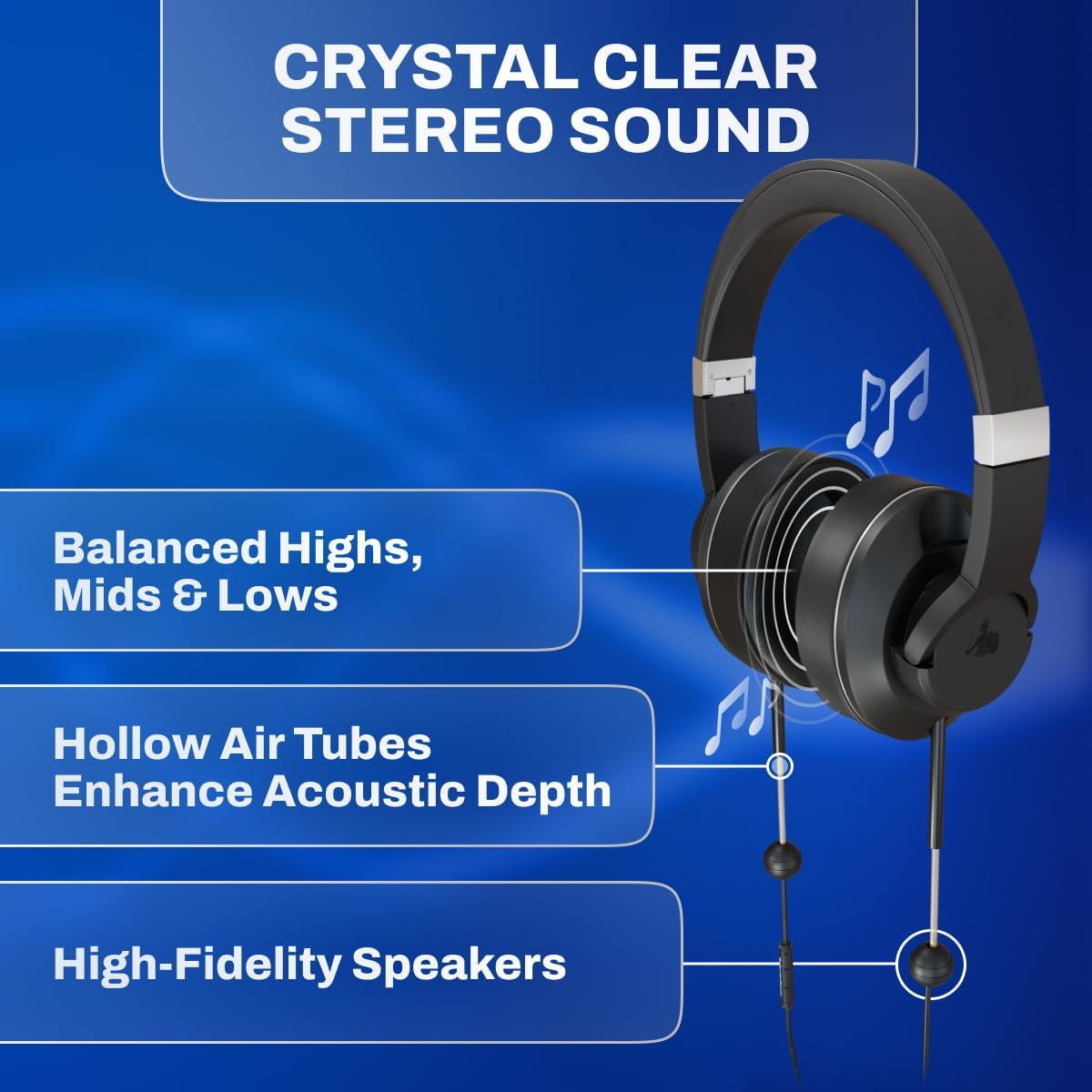
- Air tube design. The speakers sit lower on the cord and send sound up through 5-inch hollow tubes, so no electrical signal runs into the ear cups.
- No wireless at all. No Bluetooth, no pairing and no battery to wear out.
- Comfortable build. Padded ear cushions, an adjustable headband and swiveling cups make them easy to wear for a few hours.
- In-line mic and controls. You can take calls and adjust audio from the cord.
- Braided, tangle-resistant cord. The 42.5-inch nylon braid holds up better than thin rubber cable.
- Carry case included. A zippered case keeps the tubes from being crushed in a bag.
What could be better
- You need a headphone jack. Most new phones don't have one, so you'll need a USB-C or Lightning adapter, and the in-line controls may not all work through it.
- Sound is pleasant, not audiophile. Air tubes soften the sound compared with a driver right at your ear. Fine for podcasts, calls and casual music; critical listeners will want more detail and bass.
- No noise cancelling. The ear cups block some sound passively, but there's no active cancelling for engine drone.
- The health case is unproven. Health agencies say evidence has not established harm from Bluetooth headphones, which transmit at very low power. Choose these because you prefer to avoid the exposure, not because wireless headphones are known to be dangerous.
- A short-ish cord. At about three and a half feet, it suits a phone in a pocket more than a TV across the room.

Key specs explained
- Air tube: a hollow tube that carries sound acoustically from a small speaker to your ear, replacing the final stretch of wire.
- 3.5mm TRRS: the standard four-contact headphone plug that carries stereo audio plus a microphone signal.
- Copper-infused braided cord: shielding in the cable intended to reduce the low-frequency fields a normal headphone wire carries.
Tips for getting the most out of them
- Check your device for a 3.5mm jack, or buy a good adapter from your phone's maker.
- Store them in the case. Kinked tubes will affect the sound.
- Turn the volume up a notch. Air tube designs tend to play a little quieter.
- Use the swivel cups to get a good seal; it improves bass noticeably.
- Keep a pair in your travel bag. Seat-back screens still use wired jacks.

Frequently asked questions
Q: Do they work with an iPhone? Yes, with a Lightning or USB-C to 3.5mm adapter.
Q: Is there a microphone? Yes, on the cord, with audio controls.
Q: Do they need charging? No. There's no battery.
Q: Do they cancel noise? No. They rely on the padded ear cups only.
Should you buy them?
If your priority is listening without a wireless transmitter on your head, these are one of the few over-ear options built for exactly that, and they're comfortable, simple and free of charging hassles. If sound quality or noise cancelling comes first, a conventional wired or wireless headphone at the same price will sound better. Know which buyer you are and the choice is easy.
Buy on Amazon